




Experimental and Numerical Investigation of Progressive Failure of Composite Crash Box
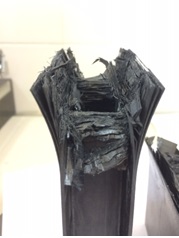
Pressure to reduce carbon emissions is encouraging automotive manufacturers to pursue vehicle lightweighting. Compared with steel and other metallic materials, composite materials are being used in an increasingly wide range of applications and in greater quantities due to their low weight, high specific strength, and high toughness and strength. Furthermore, composite materials exhibit high energy absorption capacity and excellent damping properties. However, cost pressures have limited the adoption of composite materials in the automotive market. Consequently, research on the use of composites in automotive applications has focused on components that are expensive on a per-unit-weight basis and are critical to safety. Crash boxes are among the most prominent components meeting these criteria.
The damage mechanisms in composite materials are highly complex, involving both intralaminar damage and delamination. Today, the performance of composite materials can be simulated realistically using the finite element method.
In this study, the crushing behavior of lightweight composite crash boxes was investigated using ABAQUS. A comparative study was conducted to validate the model. The Hashin criterion was used to predict intralaminar damage mechanisms, while a cohesive surface model was employed to simulate delamination. In addition, a new geometry was designed and investigated both experimentally and computationally. The numerical predictions were compared with the experimental results.