




Graphene Nanocomposites
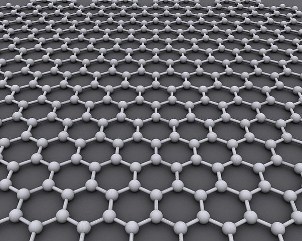
The objective of this work is to produce graphene based thermoplastic and termoset nanocomposite materials and make normally non-conductive polymeric materials conductive while relatively increasing their mechanical properties. With increased electrical conductivity, nanocomposites can be processed by alternative heating methods, namely; microwave heating, Joule heating, and induction heating. If these alternative methods are proven to work, thermosets and thermoplastic materials can be processed with lower energy requirement with increased energy efficiency in plastic and composite manufacturing.
There is considerable amount of research on graphene based nanocomposites. Graphene nanoplatelets dispersed in polymeric materials in quantities less than 1 wt% render the polymeric material conductive and lead to enhancement of mechanical properties. On the other hand, carboniferous nanoparticles are known to absorb microwave radiation and resins containing these types of nanoparticles are used as radar absorbing paints.
Thermoset materials employed in composites are mostly cured at elevated temperatures, or postcured after room temperature curing in order to achieve better strength and higher glass transition temperatures. Thermoplastic materials need to be heated beyond their melting temperature to be processed and recycled. Conventionally, these processes require conduction or convection to heat the processed parts. However, these processes are slow since the process environment (oven, autoclave, mold, etc.) is heated before the processed specimen reaches the desired temperature. If the specimen can be heated homogeneously by electromagnetic methods (without contact to the heat source) in a mold made of a material with low thermal and electrical conductivity, the overall process can be accelerated and significant energy efficiency gains can be achieved.
In this project, graphene nanoplatelets obtained from graphite via intercalation route will be dispersed (i) by sonication for thermosetting polymers, and (ii) by melt mixing for thermoplastic polymers in the smallest amount possible to achieve percolation thresholds. Polymeric nanocomposites thus prepared will be heated using three different electromagnetic heating techniques: Joule heating, induction heating, and microwave heating. Heat generation during processing will be measured by certain techniques. The potential of this approach to develop lean manufacturing technologies will be further explored to achieve significant energy efficiency gains and reduction in greenhouse gas emissions.
Especially in automotive and aeronautics sectors, by using electromagnetic energy absorption capacity of graphene, fast, efficient and novel processing techniques will be developed. While some research has been conducted on heating carbon nanotube based composites by Joule effect, microwave and induction heating have not been investigated so far. For that reason, this work is expected to lead to various original scientific papers and patents.